Educational before and after concept image of a child with squint before correction and aligned eyes after treatment

Child-focused eye muscle surgery

Strabismus surgery, also called squint correction.

A clear, parent-friendly guide to what happens before, during and after eye alignment surgery, with particular attention to anaesthesia in children.

Worldwide squint surgeon search

Search for squint and strabismus surgeons worldwide.

Use a city, country, hospital, surgeon name or eye-focus term. Searches are sent to Google Maps as squint / strabismus surgeon and paediatric ophthalmology queries.

Why it matters

Strabismus is common, and in young children it can change how vision develops.

Strabismus means the eyes are not pointing at the same target. It may be constant or intermittent, inward, outward, upward, downward, or a mixed pattern. AAPOS estimates that about 4% of the U.S. population has strabismus.

Causes

Most childhood strabismus comes from abnormal brain and nerve control of eye alignment rather than a simple weak muscle. It can also be linked with farsightedness, prematurity, family history, amblyopia, cerebral palsy, Down syndrome, hydrocephalus, cranial nerve palsy, thyroid eye disease, trauma, poor vision in one eye, or rarer eye muscle and orbital problems.

Retinal and brain development

When the eyes point in different directions, the brain receives two different pictures. Adults often experience double vision. Young children may suppress the turned eye to avoid confusion, but that can stop the visual pathways from developing normally and can cause amblyopia, reduced depth perception and poorer fine visual function.

Learning and confidence

Good vision is part of reading, balance, hand-eye coordination and classroom confidence. A child who cannot focus comfortably, has poor depth perception, or is treated as visibly different may fall behind milestones, avoid activities, become self-conscious, or struggle socially. The cosmetic issue is real too: no child wants to be teased for looking cross-eyed.

Before surgery

Non-surgical treatment is often tried first, but toddlers are not tiny adults.

Glasses

Glasses can fully or partly correct some squints, especially accommodative esotropia related to farsightedness. They also treat refractive amblyopia when one or both eyes are not focusing clearly.

Patching or drops

Patching the better eye, or using atropine drops to blur it, forces the brain to use the weaker eye. This can be very effective for amblyopia, but it is hard work with a two-year-old: they may pull it off, peek around it, become distressed, or refuse childcare routines.

Exercises, prisms and observation

Exercises can help selected older children and adults, particularly some convergence problems, but they are usually unrealistic for toddlers. Prisms may help double vision or small deviations. Some intermittent squints are watched carefully if vision is developing well and the angle is controlled.

When surgery becomes important

Surgeons measure the deviation in prism diopters rather than ordinary degrees. There is no single number that automatically means surgery for every child. Surgery is considered when the angle is large, constant, worsening, not controlled by glasses or patching, causing abnormal head posture, threatening binocular vision development, causing double vision, or likely to cause major social and educational consequences. In infantile or large-angle squints, earlier alignment may be recommended to give the best chance of binocular development.

What it is

Eye muscle surgery changes the pull of selected muscles so the eyes sit and move together better.

Most patients are children

Squint correction is usually planned by a paediatric ophthalmologist or strabismus surgeon after measurements by the eye team. The operation may weaken, tighten or reposition one or more eye muscles. It does not remove the eye, and the work is done on the surface muscles rather than inside the seeing part of the eye.

Older teens and adults

Teenagers and adults may need surgery for persistent childhood strabismus, double vision, thyroid eye disease, nerve palsies, trauma or cosmetic and social reasons. Adults may also have adjustable sutures or different planning discussions, depending on the surgeon and the pattern of misalignment.

Not always one-and-done

Many operations work well, but alignment can drift as a child grows or as healing settles. Some patients need glasses, patching, prisms, botulinum toxin or further surgery. The goal is a practical, durable alignment plan rather than a promise of mathematical perfection.

Technical details

Measurements decide which muscle, which eye, and how many millimetres.

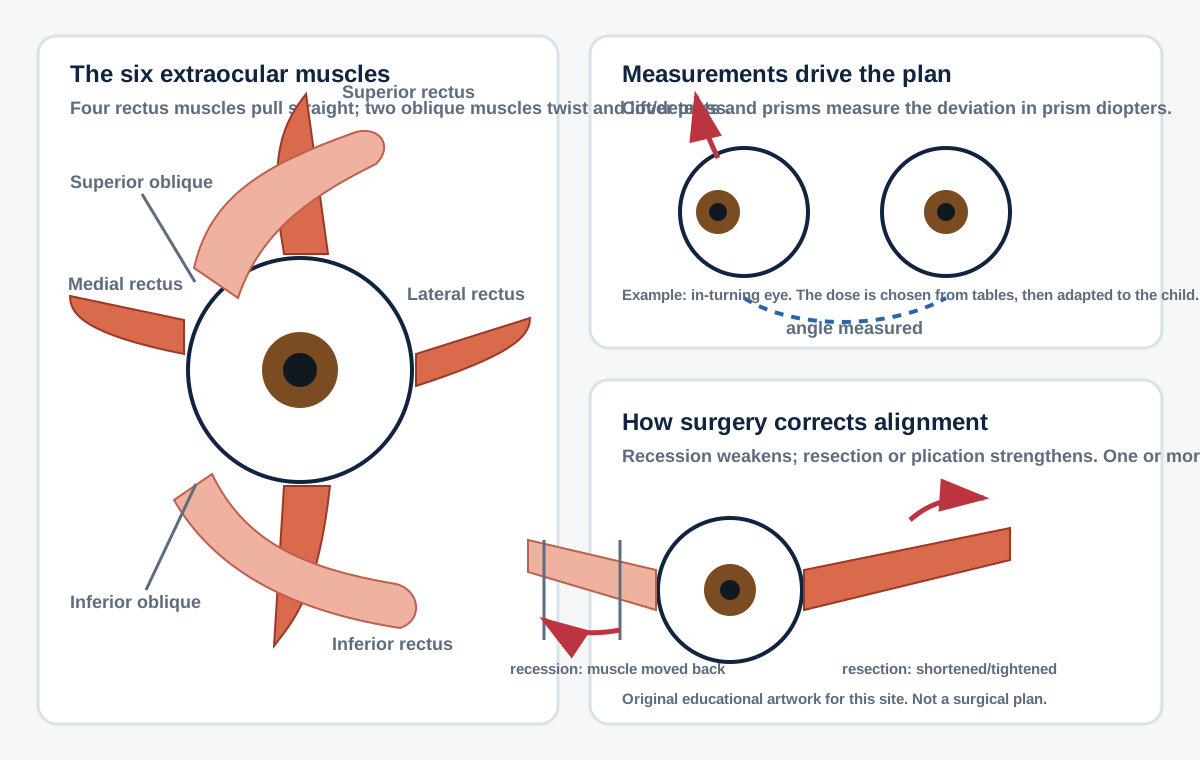
The surgeon does not simply "cut the squint out". The eye team measures the angle of deviation, checks how both eyes move, then chooses a dose in millimetres for the specific muscle or muscles that need weakening, tightening or repositioning.

Diagram showing six extraocular muscles, squint measurement and recession or resection surgery
Original simplified educational diagram. Real operations are planned from individual measurements, not from this picture.
1

Measure the deviation

Orthoptic measurements usually include cover testing, prism measurements, near and distance measurements, and checking different gaze positions. The amount is often recorded in prism diopters. More than one measurement may be needed because children vary when tired, concentrating, wearing glasses or fixing with either eye.

2

Choose the muscle dose

There are six muscles on each eye: medial, lateral, superior and inferior rectus, plus superior and inferior oblique. Surgical tables help translate the measured angle into a millimetre amount. The surgeon then adapts that plan to the child's vision, age, previous surgery, pattern of squint and whether one or both eyes are involved.

3

Weaken, tighten or shift

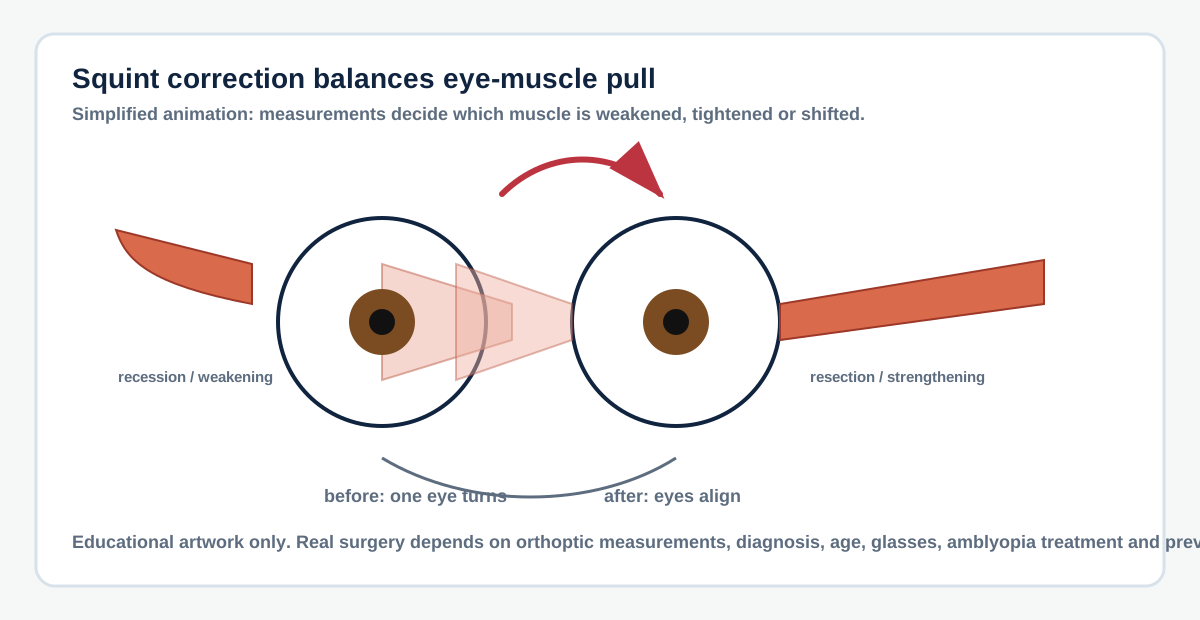
A recession moves a muscle attachment further back on the eye so its pull is weaker. A resection removes a measured length of muscle and reattaches it to strengthen pull. A plication folds and tightens without removing muscle. Some operations shift the muscle position to change the direction of pull.

What happens in theatre

The eyelids are held open with a small speculum. The surgeon opens the conjunctiva, the clear surface layer over the white of the eye, finds the selected muscle with fine hooks, places dissolving sutures, then moves or shortens the muscle by the planned amount. The eye itself is not removed from the socket.

How long it takes

A straightforward one- or two-muscle squint operation often takes about one hour of operating time, but this varies. More muscles, previous surgery, scarring, adjustable sutures, vertical or oblique muscle work, and complex adult strabismus can take longer.

One muscle or more

Some children need one muscle adjusted. Many need two muscles, for example weakening a tight/pulling muscle and strengthening its opposite partner. Others need surgery on both eyes to share the correction and keep movement balanced.

Visual guide

Before-and-after alignment, eye muscles and clinical media.

Families often understand squint surgery better when they can see the problem, the muscle anatomy and the expected direction of correction. Real clinical photos and short surgical or anaesthetic clips can be added later when they are de-identified, consented and approved.

Before and after concept image of a child with squint and aligned eyes

Before / after concept

Obvious squint, then aligned eyes

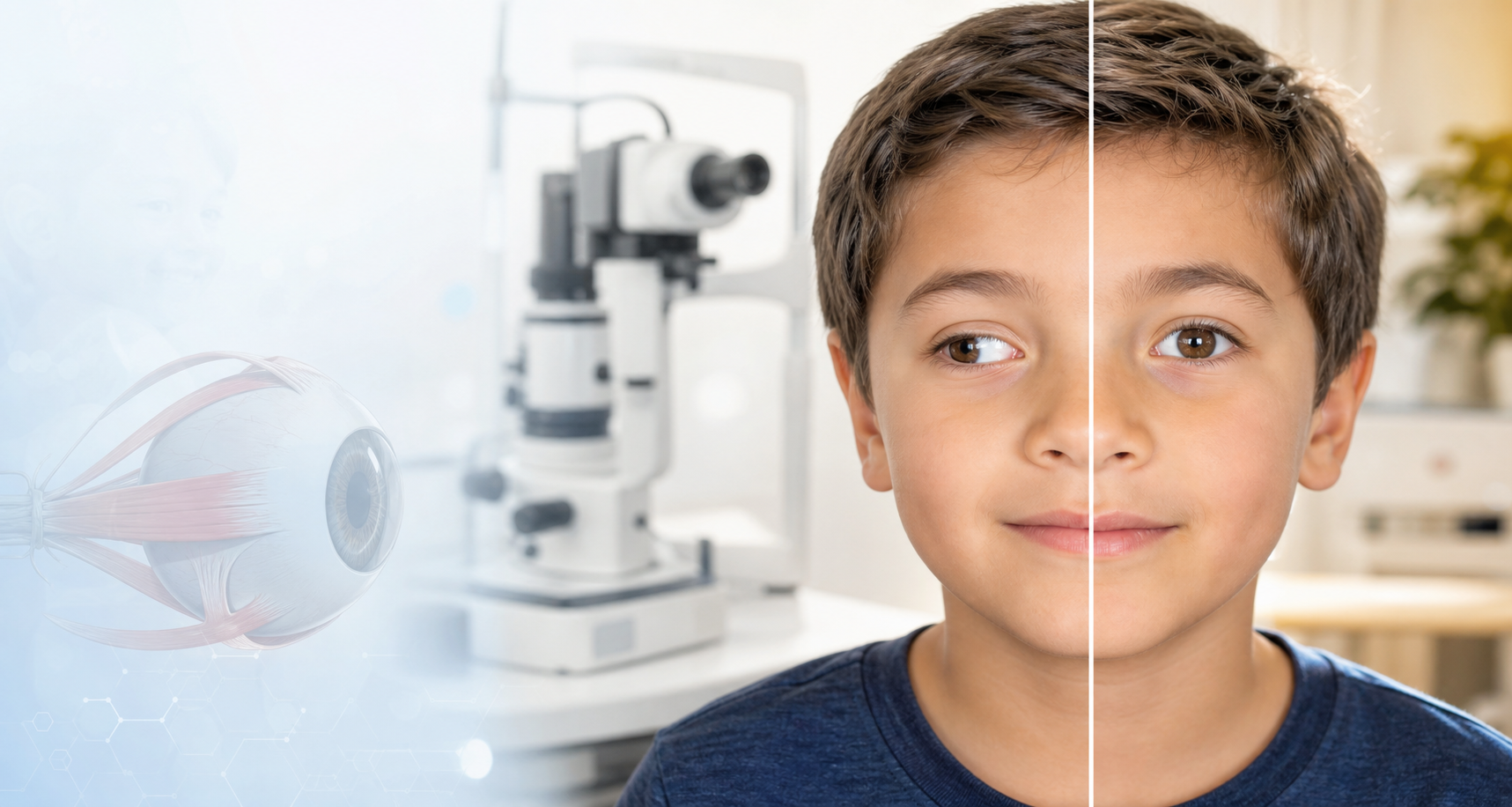
A synthetic educational image avoids privacy issues while showing what parents are actually worried about: one eye visibly turning before treatment, then a calmer aligned appearance afterwards.

Animated diagram showing eye muscle correction and alignment

Short animation

How changing muscle pull straightens the eyes

The animated diagram shows the principle: measured recession, resection, plication or muscle shift changes the balance of pull so both eyes point at the same target.

Surgery media slot

Microscope and eye-muscle photos

Later additions could include a de-identified microscope view of the conjunctiva, muscle hook, sutures or surgical field. These should be calm, clinical and non-graphic.

Anaesthesia media slot

Mask, mouthpiece and recovery photos

Future images can show the breathing circuit, mask or mouthpiece induction setup, recovery bay and child-friendly discharge snacks without showing distress or private identifiers.

Anaesthesia choices

For children, a mask or mouthpiece start is often the gentlest way in.

Final decisions depend on the child, the anaesthetist, local practice and any medical risks such as obesity, significant reflux, obstructive sleep apnoea or airway concerns.

Option 1

Gas / inhalational induction

The child breathes anaesthetic vapour through a primed breathing circuit, usually with a mask. A mouthpiece can be more pleasant for some children because the smell of volatile anaesthetic is unavoidable. When the circuit is fully primed, sleep is usually quick.

Some children briefly move, wriggle, vocalise or look agitated after first going sleepy. This is the excitement phase of anaesthesia. It can look distressing, especially to parents who are present, but children do not remember it.

Option 2

IV first / TIVA

Total intravenous anaesthesia, often using propofol, is common with many anaesthetists. It can reduce postoperative nausea in some settings, but it usually means placing an IV cannula while the child is awake.

Numbing cream such as EMLA can help, but it needs time to penetrate, can be pulled off, and may make veins smaller and harder to find. For some children it is still the right choice.

After asleep

IV and airway support

With a gas start, the IV can usually be inserted after the child is asleep. A breathing device is then placed to keep the airway open and unobstructed. Full tracheal intubation is not usually needed for straightforward strabismus surgery, unless there are factors such as obesity, major reflux/GERD-GORD, aspiration risk or airway concerns.

Experienced, old-fashioned and still useful:

Inhalational anaesthesia has been part of surgical practice since the 1840s. In skilled hands it remains a tried, practical method for children who would find an awake cannula more traumatic.

Before leaving home

Fasting matters, but well-timed clear fluid is usually helpful.

Always follow the hospital's written instructions, especially if your child has reflux, diabetes, obesity, delayed stomach emptying, emergency surgery, or another reason for a longer fast.

Food and milk

  • Solid food is commonly stopped 5-6 hours before anaesthesia.
  • Breast milk is usually allowed closer to surgery than solids, commonly around 3-4 hours depending on local rules.
  • Formula and cow's milk are often treated more like a light meal than clear fluid.

Clear fluids

  • Water or clear apple juice can often be given until about 1 hour before arrival or anaesthesia in modern paediatric practice.
  • Normal amounts are the aim. Do not push excessive volumes.
  • Giving a drink before the final cutoff often makes children less thirsty, less distressed and easier to manage.

Paracetamol / Panadol / Tylenol

  • About an hour before leaving home, some anaesthetic plans use oral paracetamol syrup.
  • A one-off preoperative dose may be 20-30 mg/kg when the anaesthetist has advised it.
  • For a 20 kg child, that can be 500 mg as a single loading dose. Check the bottle strength, avoid duplicate doses, and confirm if there is liver disease or recent paracetamol use.

After surgery

Most children are home the same day, often within a couple of hours after waking.

Recovery timing varies with nausea, sleepiness, pain, age, medical background and hospital routine. The usual rhythm is wake up, settle, drink or eat something small, then go home when safe.

1

In recovery

Children can be teary, disoriented or cross for a short time. Some sleep heavily. Others wake quickly and want a parent immediately. Once nausea is controlled, an ice block, ice cream, water, juice or a light snack is often enough to prove they can drink and start heading home. Vomiting it back up is possible, and the nurses can treat that.

2

Pain and pain relief

The eye usually feels scratchy, bruised or gritty rather than severely painful. Paracetamol is the usual base. Ibuprofen or another anti-inflammatory may be allowed if the surgeon and anaesthetist are happy. Stronger IV pain relief can be given before discharge if needed.

3

Nausea and vomiting

At least two anti-nausea medicines are commonly given, because eye surgery is a known trigger for vomiting. If vomiting continues, a third antiemetic and IV fluids can usually settle it. Persistent vomiting at home matters because children dehydrate quickly.

4

Sleep and behaviour

Sleep can be disturbed the first night. Some children are clingy, emotional or unusually active after anaesthesia. This usually settles over one or two days. A quiet evening, simple food, fluids and regular pain relief help more than forcing normal routine immediately.

5

Back to school or daycare

Many children need a few days at home. Return is usually reasonable when they are comfortable, eating and drinking, no longer vomiting, and able to avoid rubbing the eye. Daycare may need longer than school because younger children touch and bump their eyes more. Swimming, dusty play and rough sport usually wait until the surgeon clears them.

6

Eye care at home

Use drops or ointment exactly as prescribed. The eye may be red, watery and sticky. Clean crusting gently with clean gauze or cotton wool and cooled boiled water, wiping away from the eye. Avoid rubbing, poking, sand, pool water and rough play until healing is secure. Normal quiet play can restart as the child feels well.

Results and risks

The aim is straight, comfortable eyes, but biology does not offer a permanent 100% guarantee.

Most children do well. The honest discussion is about target alignment, healing, growth, scarring, brain adaptation, and whether glasses, patching or another operation could still be needed later.

Success rates

A perfect-looking result is possible and is the aim. In medical terms, "success" usually means the eyes are aligned within an acceptable range, symptoms are better, and the child functions well. A 100% perfect permanent result cannot be promised, because healing and visual development continue after surgery.

Second operation

Some children need further surgery for undercorrection, overcorrection, growth-related drift, complex squint patterns, poor fusion potential or late recurrence. A second operation is not necessarily a failure; it may be part of managing a moving target as a child grows.

Scarring and recurrence

The muscle heals back onto the white of the eye through scar tissue. Usually this is exactly what is needed. Excessive scarring, restriction, a slipped muscle, or unusual healing can pull the eye out of line again or limit movement, and occasionally needs further treatment.

Bleeding and infection

A bloodshot eye and small surface bleeding are common. Serious bleeding or infection is rare, but important. Increasing pain, swelling, discharge, fever, worsening redness after initial improvement, reduced vision or a child who seems very unwell should be checked urgently.

Double vision and eye movement

Adults and older teenagers may notice temporary double vision while the brain adapts. Children often suppress one image and may not describe it clearly. Rarely, double vision, limited movement, eyelid position change or a small glasses prescription change can persist.

Follow-up appointments

Follow-up may be within days to weeks, then again after the alignment stabilises. The team checks healing, eye position, movement, vision, glasses needs, amblyopia treatment and whether the result is holding over time.
Premedication

Sedation is not usually necessary, but it can be useful for selected children.

Many children do well with calm preparation, a parent present at induction, and a quick mask or mouthpiece start. Sedation may be advisable for a child who is extremely distressed, has severe needle phobia, developmental differences, autism, previous traumatic healthcare experiences, or cannot safely cooperate.

There are several possible sedative options. The trade-off is that sedation can make timing, wake-up and discharge less predictable, so it should be a tailored decision rather than an automatic step.

Ask before the day

Good questions for the ophthalmologist and anaesthetist.

Can I stay while my child goes to sleep?

Many teams encourage a parent to be present for induction. It helps many children, but the team may ask you to step out at a particular point so they can focus on airway care and monitors.

Mask, mouthpiece or IV first?

Ask what the anaesthetist usually does for this operation, and mention previous distress, autism, needle phobia, reflux, snoring, obesity or difficult airway history.

What if my child vomits?

Vomiting can happen even after preventive medicines. Recovery staff can give further anti-nausea treatment and IV fluid if needed.

What should we do about regular medicines?

Bring a medication list. Ask specifically about inhalers, ADHD medication, diabetes medication, blood thinners, reflux medicine and any recent paracetamol or ibuprofen.

For clinicians and practices

ADD YOUR PRACTICE HERE

Submit a pending profile for SquintSurgeons.com. This is for paediatric ophthalmologists, strabismus surgeons, orthoptic-led clinics and eye practices with a real focus on squint, amblyopia and eye muscle surgery.

Email profile details

Profiles are pending review and are not endorsements, rankings or verified listings. This static page prepares the message; it does not publish automatically.

For families and referrers

Squint surgery referral / enquiry form

Use this as a printable or email-ready first enquiry. It is designed for children who may have other congenital, developmental, behavioural, respiratory or neurological issues as well as the eye problem. This static page does not upload reports or eye photos; it only lists filenames so you can attach the actual files yourself.

Useful documents if available
Email referral

This is an initial enquiry only, not emergency triage. For severe pain, sudden vision change, breathing trouble, seizures, or an acutely unwell child, seek urgent medical care.

Further reading

Connected medical resources

This page is general information for discussion with your own surgical and anaesthetic team. It is not a substitute for individual medical advice.